
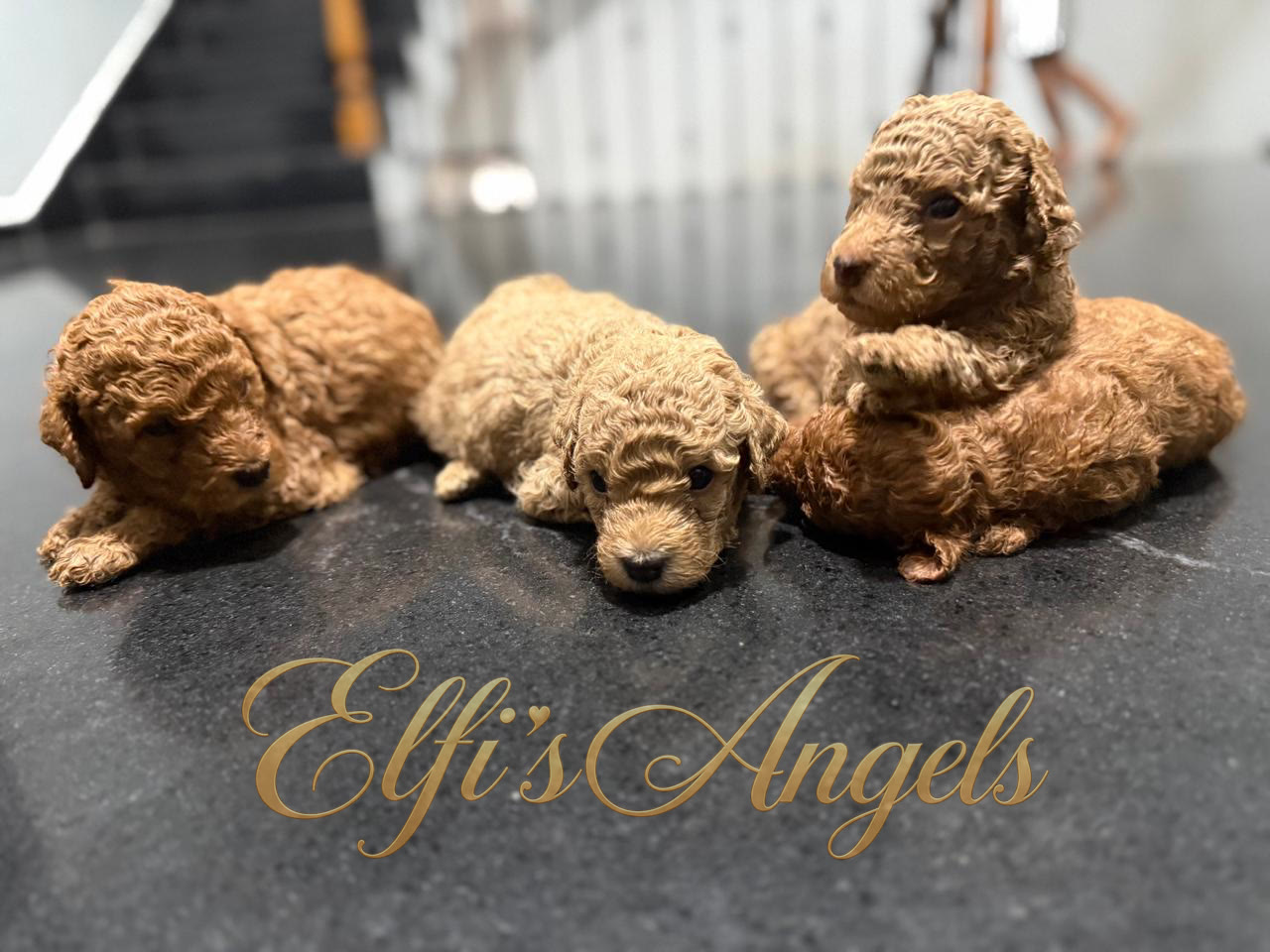
Potty training becomes much easier when the answer is always the same: one toilet place, the right timing and an immediate little celebration when your puppy gets it right.
For apartment families, a bathroom tray or a safely enclosed balcony tray is practical and reliable. Outdoor toileting can be added at the right stage, and many families happily keep the tray as a backup for working days, late nights and heavy rain.
The quick answer
Start here
- Take the puppy to the toilet place after waking, eating, drinking, playing and before sleep.
- A stable tray with a clear boundary works well in a bathroom or on a fully secured, shaded balcony.
- Use one cue, wait calmly and reward immediately after the puppy finishes.
- Outdoor toileting can join the routine once your veterinarian confirms where ground access is appropriate.
Choose one primary toilet place
- Bathroom tray: easy to clean, protected from weather and available at night.
- Balcony tray: useful for ventilation, but the balcony must have secure railings, shade, supervision and no fall or escape gaps.
- Outdoor spot: excellent when the route is quick, predictable and veterinarian-approved for the puppy’s vaccination stage.
- Combination system: keep a tray as the reliable home toilet and use the same verbal cue outdoors.
A little Elfi’s note: Do not place the toilet tray beside food, water or the sleeping area. Use a tray large enough for the puppy to turn around fully; a Standard Poodle needs a much larger surface than a Toy.
Take the puppy at the moments that matter
A common “age in months plus one hour” rule describes an approximate maximum under some conditions; it is not a target waiting time. Toy puppies and active, recently fed or recently awakened puppies may need much more frequent opportunities.
- Immediately after waking in the morning and after every nap.
- Shortly after eating or a substantial drink.
- After energetic play, training or excitement.
- When you see sniffing, circling, wandering away or sudden restlessness.
- Before crate or pen time, immediately after release, and last thing at night.
- At frequent clock-based intervals while awake until a clear individual pattern develops.
The repeatable training loop
Lead or carry the puppy directly to the tray or outdoor spot without starting a play session.
Stand quietly and use one simple cue such as “toilet.”
The moment the puppy finishes, mark the success with praise and give a tiny reward at the toilet place.
Allow supervised freedom or play after success, so toileting predicts something pleasant.
If nothing happens within a few minutes, return to close supervision or the safe pen for 10–15 minutes and try again.
What to do after an accident
Interrupt only if you catch the puppy beginning, then move calmly to the correct place. Do not shout, rub the puppy’s nose in the mess or punish after the event; that can teach the puppy to hide elimination rather than choose the tray.
Clean the area thoroughly with a pet-safe enzymatic cleaner. Review what happened immediately before the accident and shorten the next interval. Sudden regression, repeated straining, diarrhoea, very frequent urination, blood, pain or unusual thirst needs veterinary advice.
Adding outdoor walks at the right time
Once your veterinarian clears the route, take the puppy to the same outdoor surface at the predictable times above. Keep the first goal toileting, not distance. Use the same cue and reward at once.
Apartment travel time matters. If the lift and walk to a safe area take longer than the puppy can wait, use the tray first and train outdoor toileting as a second skill. A tray is not a failure; it is a practical, hygienic toilet that can remain valuable during monsoon rain, extreme heat, illness or late nights.
Sample rhythm for a newly arrived 10-week-old puppy
| Event | Action |
|---|---|
| Puppy wakes | Go directly to the tray or cleared outdoor spot. |
| Breakfast | Return shortly after the meal and watch for signals. |
| Play or training | Offer a toilet trip immediately afterwards. |
| Nap or pen time | Go before and immediately after. |
| Evening meal | Repeat the meal routine and record timing. |
| Bedtime | Final quiet trip; expect that some young puppies still need a night break. |
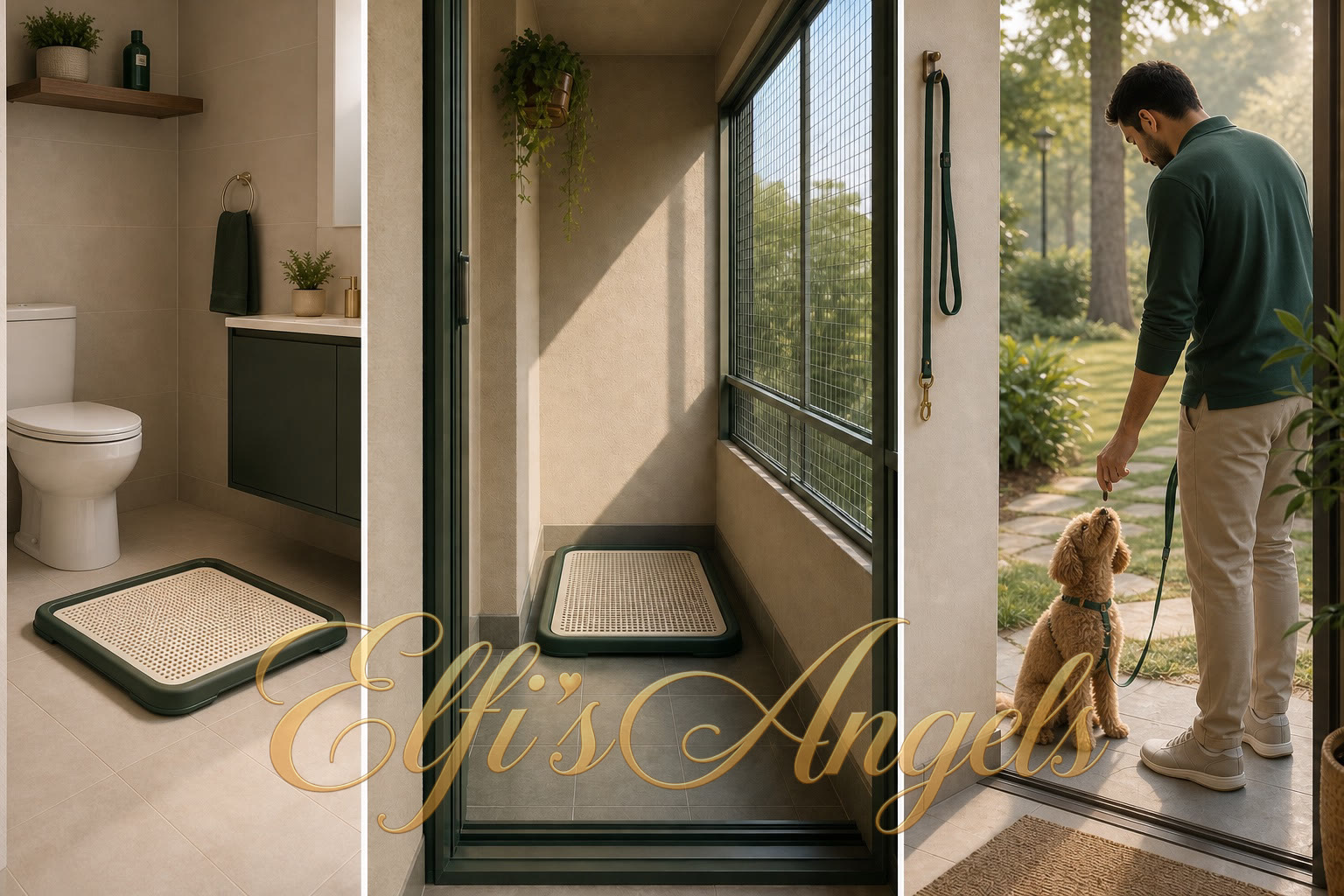
See the three practical toilet options
The best location is safe, easy to reach at 2 a.m., easy to clean and available every day. A tray can use a washable grate, pad holder or maintained grass-style insert. Keep the surface consistent while learning; changing from pad to grass to tile every day makes the target unclear.
A balcony is suitable only when it is fully enclosed against falls, shaded, weather-safe and free of climbable furniture, toxic plants and stored chemicals. The puppy should not be shut outside or left unsupervised.
The first seven days: remove guesswork
| Days | Owner focus |
|---|---|
| 1–2 | Keep the puppy near you or in the pen; take to the tray at every transition and record times. |
| 3–4 | Look for the puppy’s pattern, shorten the interval before usual accidents and keep rewarding instantly. |
| 5–7 | Add a few minutes of supervised freedom after success; return to closer supervision after any accident. |
| After week 1 | Increase freedom one room at a time only while success remains reliable. |
Night-time toilet training
Place the crate or pen close enough to hear restlessness. A young puppy may wake, circle, whine or become suddenly active because it needs the toilet. Carry or calmly guide the puppy to the same place, use minimal light and conversation, reward quietly and return to sleep.
Do not deliberately restrict normal water access to force a dry night unless a veterinarian has given a medical instruction. If night waking suddenly increases after previous progress, or the puppy strains, produces only drops or seems painful, arrange veterinary care.
How to add outdoor toileting without losing tray reliability
Ask your veterinarian when and where ground access is acceptable based on the puppy’s vaccine record and local disease risk.
Take the puppy to one quiet outdoor surface at the same high-probability times used for the tray.
Use the existing toilet cue and reward immediately after finishing.
Keep the tray available as a high-rise or bad-weather backup until the outdoor pattern is reliable.
If you eventually want outdoor-only toileting, reduce tray access gradually rather than removing it during a busy week.
Why accidents continue—and the exact fix
| Problem | Likely reason | What to change |
|---|---|---|
| Accident just after a tray trip | The puppy was distracted or the visit ended too soon. | Wait quietly a little longer, then supervise closely before giving freedom. |
| Pees beside the tray | Tray is too small, dirty, unstable or the puppy has poor aim. | Use a larger stable tray and clean it promptly while retaining a small scent cue. |
| Uses rugs or bathmats | Soft surfaces feel similar to pads. | Temporarily remove rugs and supervise access while the tray habit strengthens. |
| Hides to toilet | Too much freedom or a history of punishment. | Return to close supervision and reward openly; never scold after the fact. |
| Regression after progress | Schedule, environment, stress or health changed. | Reduce freedom, restore the timetable and consult a vet for urinary or digestive signs. |
Tray hygiene and signs that need a veterinarian
- Remove stool promptly, wash reusable parts with pet-safe products and keep the surrounding floor dry.
- Use an enzymatic cleaner for accidents; ammonia-like cleaners can leave an odour that resembles urine.
- Wash hands after handling waste and keep children away from the toilet station.
- Seek advice for straining, blood, pain, repeated tiny urinations, very frequent thirst, persistent diarrhoea, vomiting, lethargy or sudden regression.
- Do not label a puppy stubborn until timing, access, surface preference, fear and medical causes have been checked.
The Elfi’s Angels difference
We begin with predictable toilet timing and make tray training feel normal, so apartment families have a practical starting point.
Our puppies leave at about 10 weeks with clear KCI-related paperwork, familiar care information and direct handover guidance. We are based in Chennai and shipping across India, with availability confirmed personally for every family.
Quick answers
Things families ask us
Is a bathroom potty tray good for a Poodle puppy?
Yes. A correctly sized, consistently placed and frequently cleaned bathroom tray is a practical permanent toilet for many apartment homes.
Can I train my Poodle to use both a tray and outdoors?
Yes. Use one clear cue and reward both approved locations. Consistency is more important than forcing a single method.
Should I use a pee pad directly on the floor or a tray?
A stable tray or pad holder gives clearer boundaries and reduces shredding and sliding. Choose a surface you can clean and maintain consistently.
Can I teach both a tray and outdoor toileting?
Yes. Use the same cue and reward in both places, while keeping one primary option during early learning. A tray can remain a useful high-rise, illness or severe-weather backup.
How long does potty training take?
Progress usually develops over weeks and may remain imperfect for months because bladder control and habits mature gradually. Judge the trend, not one accident.
Why does my puppy eat or play with the pad?
Loose pads can become toys. Use a secure covered tray, increase supervision and offer legal chew and play outlets. Speak to a veterinarian if the puppy swallows material.
Should I punish a puppy for an accident?
No. Punishment can teach hiding or fear without teaching the correct place. Interrupt only if calmly possible, move to the toilet spot, reward success and clean the accident thoroughly.
Want to see our sources?Breed clubs, veterinary guidance and feeding references used for this guide
- How to potty train a puppyAmerican Kennel Club
- Indoor potty training for puppiesAmerican Kennel Club