

That soft curly coat is one of the loveliest things about a Poodle—and it stays lovely with a simple rhythm. Comb regularly, keep a professional grooming date in the calendar and make tiny handling exercises part of puppy life.
If combing feels hard to maintain, a neat full trim is a perfectly good choice. Comfort always wins over a complicated hairstyle.
The quick answer
Start here
- Comb at least once every two days for a maintained short coat; longer coats need more frequent attention.
- A full professional groom every 6–8 weeks is ideal for many Poodles; do not let complete maintenance go beyond three months.
- Check ears and nails regularly and build tooth brushing as a calm little habit.
- Start gentle paw, ear and comb handling from 10 weeks so grooming feels normal and rewarding.
A practical maintenance schedule
| Task | Routine | Escalate when |
|---|---|---|
| Comb and line-brush | At least every two days for a short maintained coat; daily for longer coat or friction areas. | A comb cannot reach the skin, mats are tight, or the dog is painful. |
| Face, paws and hygiene area | Inspect weekly and trim on the groomer’s schedule. | Eyes are irritated, paws are inflamed or hygiene clipping risks injury. |
| Full groom or trim | Usually every 6–8 weeks; at minimum arrange complete professional maintenance within 3 months. | The coat is matting sooner or home care is not working. |
| Bath | As needed with dog-safe products, followed by complete drying and combing. | Skin becomes itchy, flaky, oily or unusually smelly. |
| Nails | Check weekly and trim before they alter stance or click heavily on the floor. | You cannot identify the quick, the dog panics, or a nail splits. |
| Ears | Inspect weekly and after bathing or swimming; clean only as your vet advises. | Redness, pain, discharge, repeated head shaking or odour. |
| Teeth | Build toward daily brushing with dog toothpaste. | Bleeding gums, broken teeth, pain, heavy tartar or bad breath. |
How to comb effectively
Work on a non-slip surface when the dog is calm and use tiny rewards for stillness.
Separate the coat into small lines and brush from the skin outward rather than polishing only the top.
Follow with a metal comb; if the comb catches, the tangle is not finished.
Pay special attention behind ears, armpits, collar area, legs, tail base and anywhere a harness rubs.
Stop if the skin pulls or the dog is distressed. A groomer should clip tight mats rather than having them painfully ripped out.
A full short trim is a responsible option
If combing every day or two is hard, ask for a practical short sporting, kennel or utility-style trim. A short coat still needs bathing, skin checks, nails, ears and regular clipping, but it reduces the amount of daily detangling.
Do not wait for severe matting before booking a groom. Mats trap moisture, pull skin and can hide wounds, parasites and infection.
Ears and nails: avoid over-treatment
Look and smell before cleaning an ear. Use only a dog ear product recommended for the individual and never push cotton buds or tools into the canal. Healthy ears may not need frequent cleaning; over-cleaning can irritate them. Ask your veterinarian whether any ear hair needs attention rather than plucking routinely.
For nails, remove small amounts and reward often. Dark nails make the quick difficult to see, so a groomer or veterinary professional is safer when you are unsure. Dewclaws need checking because they may not wear against the ground.
Start cooperative care at 10 weeks
- Touch one paw, reward, and release before the puppy struggles.
- Lift an ear flap briefly and reward calmness.
- Introduce the comb for seconds, starting on an easy body area.
- Pair dryer sounds at a distance with food before any grooming appointment.
- Book a gentle puppy introduction with the groomer before a long, demanding full groom.
What a safe home grooming setup looks like
Home grooming should feel like cooperative handling, not restraint until the dog gives up. Work in one- to three-minute sessions at first: touch a paw, reward; lift an ear flap, reward; comb one small line, reward. End while the puppy is still successful.
A grooming table needs secure footing and continuous adult control. Never leave a dog tethered or unattended on a raised surface.
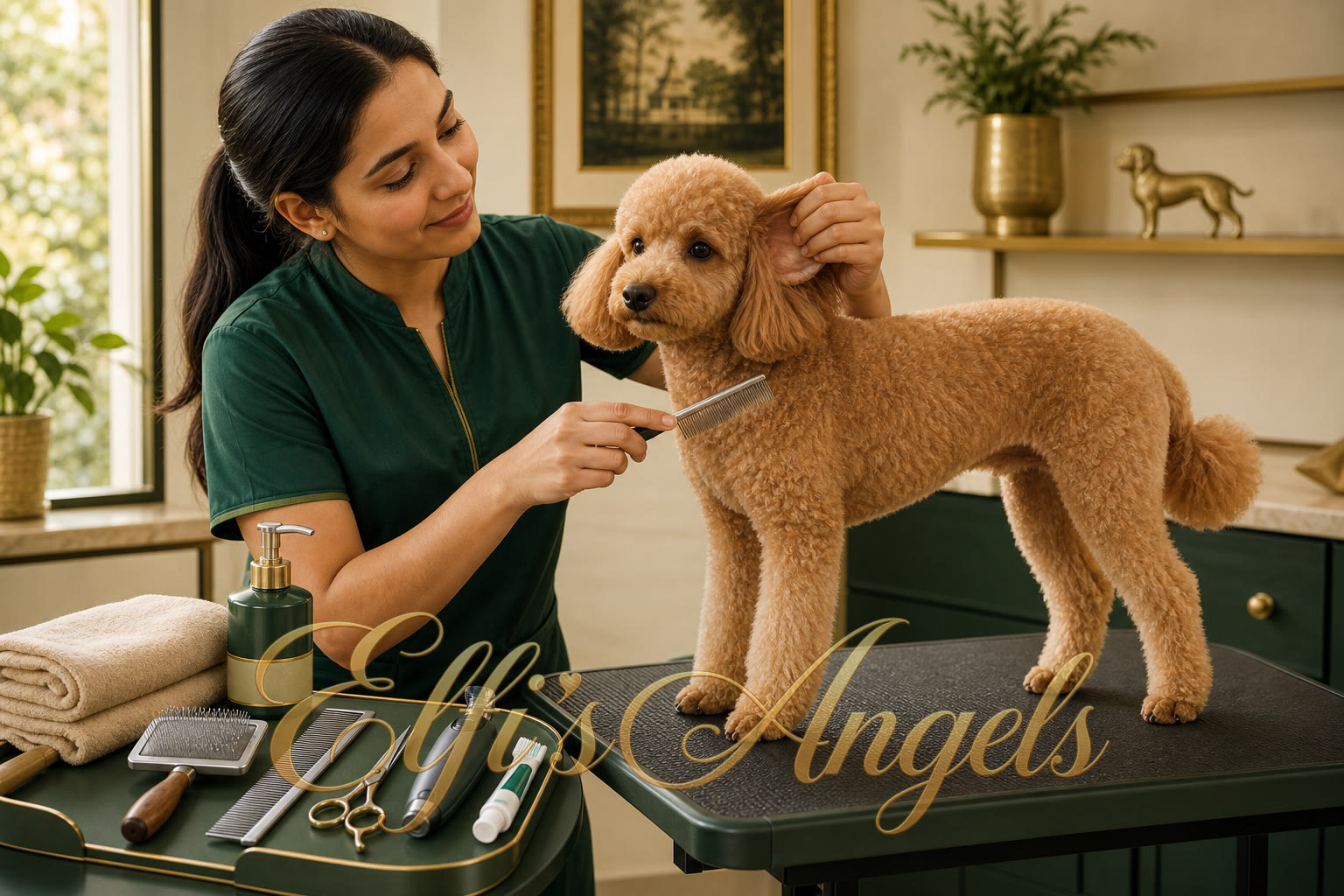
The useful home toolkit
| Tool | Use | Common mistake |
|---|---|---|
| Slicker brush | Separates curls and begins detangling in small sections. | Brushing only the top while mats remain at the skin. |
| Metal greyhound comb | Checks that each finished section is clear to the skin. | Forcing through a tight mat and pulling the skin. |
| Detangling spray | Adds slip when appropriate for the coat and product. | Soaking mats and assuming product replaces technique. |
| Dog nail clipper or grinder | Keeps nails short enough for normal stance and traction. | Removing too much at once or working without quick-control supplies. |
| Dog toothbrush and toothpaste | Reduces plaque through frequent mechanical brushing. | Using human toothpaste or relying only on dental chews. |
| Dog-safe shampoo and dryer plan | Cleans skin and coat, followed by complete drying. | Leaving dense coat damp or using very hot air. |
Bathing and drying without creating mats
Comb out tangles before bathing; water can tighten existing mats.
Use lukewarm water and a dog-safe product diluted and applied as directed.
Rinse thoroughly, including armpits, groin, feet and under the ears.
Blot rather than rub the coat into tangles, then dry completely with safe airflow and temperature.
Comb in sections during or after drying so curls do not set around hidden knots.
Poodle ear care: inspect, do not over-treat
Lift the ear flap weekly and learn the dog’s normal colour and smell. Keep the outer ear dry after bathing. Use only the cleaner and technique your veterinarian recommends; do not push cotton buds or tools into the canal.
Routine plucking is not a universal home rule. Hair, wax and inflammation should be assessed for the individual. Repeated head shaking, scratching, pain, odour, redness or discharge needs a veterinary ear examination before a groomer masks the signs.
Nails and teeth: small tasks with large effects
Check nails weekly, including dewclaws. Long nails can alter stance and reduce grip on tile. Take tiny amounts, use a grinder if the dog prefers it, and ask a groomer or vet nurse to demonstrate. Bleeding that does not stop or a split nail needs veterinary help.
Build toward daily tooth brushing with dog toothpaste. Lift the lip briefly, reward, then add the brush gradually. Bad breath, bleeding gums, loose or broken teeth, dropping food or chewing on one side are medical signs—not a reason for a stronger grooming product.
How to choose and brief a groomer
Ask how dogs are handled, dried, supervised and given breaks, and disclose fear, pain, ear or skin history.
Show a realistic pet-trim photograph and agree on coat length, face, feet, tail and hygiene areas.
Tell the groomer when the dog was last groomed and where mats usually form.
Authorise comfort clipping when mats are tight; dematting should not become prolonged pain.
Check the dog’s skin, nails, ears, eyes and behaviour after each appointment and report concerns promptly.
The Elfi’s Angels difference
We introduce touch, combing and gentle handling early so your family can continue grooming as a calm, rewarding routine.
Our puppies leave at about 10 weeks with clear KCI-related paperwork, familiar care information and direct handover guidance. We are based in Chennai and shipping across India, with availability confirmed personally for every family.
Quick answers
Things families ask us
How often should I comb a Poodle?
At least once every two days for a short maintained coat; daily is safer for longer coat and friction areas.
How often does a Poodle need professional grooming?
Many Poodles do best every 6–8 weeks. At minimum, arrange a complete groom and maintenance review within three months.
Should I clean my Poodle’s ears every week?
Inspect weekly, but clean only when needed and according to veterinary guidance. Pain, odour, discharge or redness needs a veterinary examination.
Can I groom a Poodle only once every three months?
Three months is the maximum interval for a complete professional maintenance review, not permission to ignore the coat between visits. Most pets need clipping much sooner and regular home combing throughout.
Should I shave a matted Poodle?
Tight mats are usually safest and kindest to clip off professionally. Trying to brush them out can tear skin and cause significant pain.
Can I use human shampoo or toothpaste?
Use products made for dogs unless your veterinarian has directed a specific alternative. Human toothpaste can contain ingredients dogs should not swallow.
Why does my Poodle hate brushing?
Pain from pulling, long sessions, unstable footing or lack of gradual training are common causes. Rule out skin or orthopedic pain, shorten the session and rebuild with rewards.
Does a puppy need grooming before the adult coat arrives?
Yes. Early sessions teach calm handling and prevent the first groom from becoming an overwhelming event, even when the puppy coat is still easy.
Want to see our sources?Breed clubs, veterinary guidance and feeding references used for this guide
- How to groom a dog at homeAmerican Kennel Club
- Is the Poodle the right breed for you?American Kennel Club
- Poodle (Standard) breed informationAmerican Kennel Club
- Official Poodle breed standardPoodle Club of America